
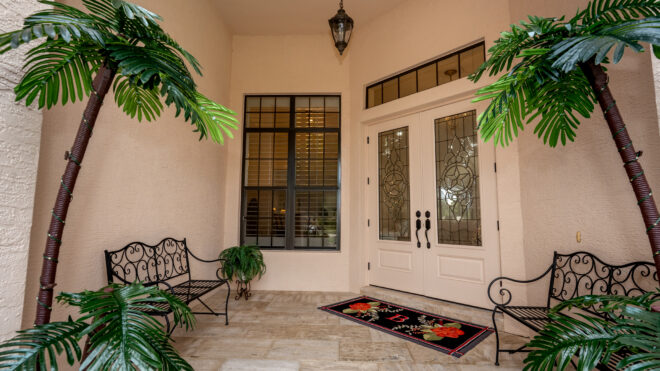
Stucco is everywhere in Sarasota, from Mediterranean-style estates to condo communities and HOA neighborhoods. It is a great exterior for Florida, but it is also one of the trickiest surfaces to paint well. Choose the wrong stucco paint, or skip the prep, and you can end up with peeling, blistering or cracks showing through within a couple of seasons. This guide explains how stucco behaves, how elastomeric and acrylic coatings compare, what good prep looks like, and what affects how long a stucco paint job lasts in Southwest Florida.
Why Stucco Needs Different Paint Thinking
Stucco is a construction material made of aggregates, a binder and water that is applied wet and hardens into a very dense solid, and it is commonly used as a decorative and protective cladding on exterior walls, according to Wikipedia’s overview of stucco. Those features are what make it tough, and they are also what make it demanding to paint.
- It is porous and textured. Stucco soaks up more paint than a smooth surface, and the texture has to be fully coated, including the low spots.
- It cracks. Hairline cracks are common as a house settles and as stucco expands and contracts in the heat. Cracks need to be repaired before any coating goes on.
- It holds moisture. Sarasota’s humidity, summer storms and salt air mean stucco can be damp, stained with mildew or chalky before painting begins.
- It faces intense sun. UV exposure fades color and breaks down paint over time, which is why product choice matters.
Our guide to the best paint choices for Sarasota weather covers how these conditions affect paint more broadly, and our earlier post on selecting the ideal exterior paint for your Sarasota home compares stucco with other exterior materials.
Elastomeric vs. Acrylic Stucco Paint
Two types of coatings come up most often when homeowners ask about the best paint for stucco: acrylic exterior paint and elastomeric coatings. Both can work well. The right choice depends on the condition of your stucco and what you want the coating to do.
Acrylic Stucco Paint
A 100% acrylic exterior paint formulated for masonry is the most common choice for stucco. It generally goes on thinner than an elastomeric coating, is easier to recoat down the road and holds color well when you choose a quality product. The trade-off is that it does not bridge cracks the way a thicker, more flexible coating can, so the stucco needs to be in sound shape, with cracks properly repaired, before painting.
Elastomeric Stucco Paint
Elastomeric paint is a thick, flexible coating that stretches slightly as the wall moves. Because of that, it can help cover hairline cracks and add a water-resistant layer to a wall. It is a popular option for stucco with minor cracking. The trade-offs are that it is a heavier film that can be harder to remove or change later, it needs the surface to be dry and sound before it goes on, and trapped moisture behind a thick coating can lead to blistering. It also tends to cost more per gallon.
Which One Is Right for You?
There is no single answer. In general, stucco that is in good condition with a few repaired hairline cracks often does well with a quality acrylic exterior paint, while stucco with widespread fine cracking may be a candidate for an elastomeric coating. A professional who inspects your walls can tell you which system makes sense. Ask them to explain why they recommend a particular product, not just which brand they use.
How to Paint Stucco: Prep Is Where Paint Jobs Are Won or Lost
On stucco, prep matters even more than the product. Paint applied over dirt, mildew, chalk or unrepaired cracks will not last, no matter how good the can says it is. A solid stucco prep process usually includes these steps:
- Inspect the walls. Look for cracks, hollow-sounding patches, stains, peeling paint and signs of moisture problems.
- Clean the surface. Dirt, algae, mildew and chalky residue prevent paint from bonding. Many projects start with professional house power washing.
- Fix the moisture source. The EPA’s guide to mold and moisture is clear that controlling moisture is the key to controlling mold, and that you should not paint over moldy surfaces because paint applied over them is likely to peel.
- Repair cracks and damage. Patch cracks and failed areas with a compound made for stucco, and clean off any efflorescence (the white, powdery salt deposits moisture leaves on masonry) so problems do not telegraph through the new coating.
- Caulk and prime. Seal gaps around windows, doors and trim, and apply a masonry primer or chalk sealer to bare, patched or chalky areas so the finish coat can grip.
- Paint in the right conditions. Surfaces need to be dry, and humidity and temperature affect how paint cures. See our post on how long to wait between coats of paint in Florida’s heat and humidity.
For a longer checklist, read our exterior house painting prep tips, and if mildew is a recurring problem, see keeping mold off painted surfaces in Sarasota.
Choosing Color and Sheen for a Stucco Home
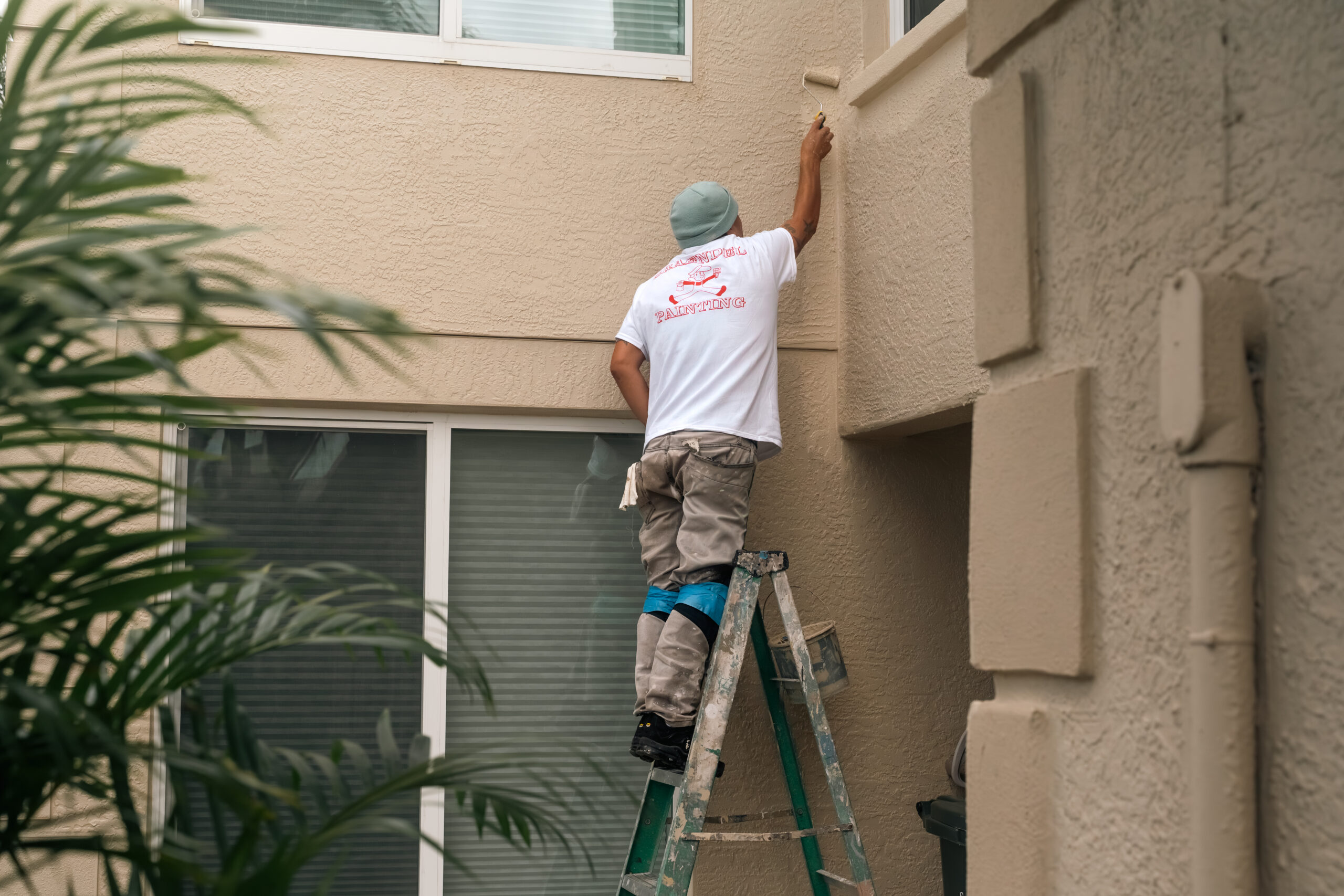
Stucco’s texture creates tiny shadows, so colors can look different on stucco than they do on a smooth paint chip. Test a sample on your own wall and look at it in morning light, midday sun and evening before you commit. Lighter colors reflect more sunlight than dark ones, which is one reason whites and soft neutrals are so popular on Florida homes. Our guide to choosing white exterior paint for your Sarasota home goes into undertones and sheen in more detail.
If you live in an HOA or condo community, check the approved color palette and get written approval before work begins.
For sheen, flat and satin finishes are the most common choices on stucco. A flat or low-sheen finish helps hide the texture and minor patch marks, while satin is a little easier to wash. Higher-gloss finishes tend to highlight every bump and repair on a textured wall.
How Long Does Stucco Paint Last?
There is no one number, because the lifespan of a stucco paint job depends on several things working together:
- Prep quality. A cleaned, repaired and primed wall holds paint far better than one that was painted over.
- Product choice. Higher-quality exterior coatings generally offer better color retention and mildew resistance.
- Application. Stucco’s texture means paint has to be worked into the surface, and the number of coats and coverage matter.
- Exposure. South- and west-facing walls take more sun, and coastal homes see more salt and moisture.
- Maintenance. Routine washing and quick repairs to cracks and caulk help the coating last. See why exterior paint maintenance is crucial in Florida.
Warning signs that stucco paint is wearing out include fading, a chalky residue you can wipe off with your hand, peeling or blistering, and new hairline cracks. If you spot sun damage, our post on fixing sun-damaged exterior paint explains your options, and if paint is peeling off, see what to do when paint won’t stick to exterior walls.
What to Ask When You Get a Stucco Painting Estimate
A low number is not always a good deal if it leaves out the work that makes paint last. When you collect estimates for painting stucco, ask each painter to spell out:
- How the walls will be cleaned and how mildew will be handled
- How cracks and damaged areas will be repaired
- Whether the walls will be primed, and with what
- The brand and product line of the coating, and whether it is acrylic or elastomeric
- The number of coats and how the paint will be applied
- Licensing, insurance and warranty or satisfaction terms
- For homes built before 1978, whether the company follows lead-safe work practices under the EPA’s Lead Renovation, Repair and Painting Program
For help understanding what drives the price, see our guide to what it costs to paint a house in Sarasota.
Painting Stucco With Braendel Painting
Braendel Painting, Inc. has been painting Sarasota homes since 1987 and serves Sarasota, Manatee and Charlotte counties. The company is licensed and insured, offers free estimates, and stands behind its work with a 100% satisfaction commitment. Along with single-family homes, the team also paints condo and HOA communities and commercial buildings. Learn more about our residential painting services and our interior and exterior painting, or read what past customers have said on the customer reviews page.
Frequently Asked Questions
What is the best paint for stucco in Florida?
It depends on the condition of your stucco. A quality exterior acrylic paint is a common choice for sound stucco, and an elastomeric coating can be a good fit when there is fine cracking. Prep and application matter as much as the product.
Is elastomeric paint better than regular exterior paint for stucco?
Not always. Elastomeric coatings are thicker and more flexible, which can help with hairline cracks, but they are not the right answer for every wall. The best choice depends on the stucco’s condition and moisture levels.
Do I need primer on stucco?
Often, yes, especially on bare, patched or chalky areas. Primer helps the finish coat bond and cover evenly. Your painter can tell you where primer is needed.
Can I paint over stucco that has already been painted?
Usually, yes, as long as the existing paint is sound. Loose, peeling or chalky paint has to be cleaned or removed first, and the new coating needs to be compatible with the old one.
Can I paint new stucco right away?
Newly applied stucco generally needs time to cure and dry before it is painted. Follow the stucco installer’s and the paint manufacturer’s guidance on timing.
Should I pressure wash stucco before painting?
Cleaning is a key part of prep, and professional power washing is a common way to remove dirt, algae and mildew. The surface needs to dry fully before painting.
Get a Free Stucco Painting Estimate in Sarasota
The fastest way to find out which stucco paint and prep your home needs is to have experienced painters in Sarasota take a look. Call Braendel Painting at (941) 923-1968 or request a free estimate online. Our office is located at 136 N Tamiami Trail, Osprey, FL 34229.