
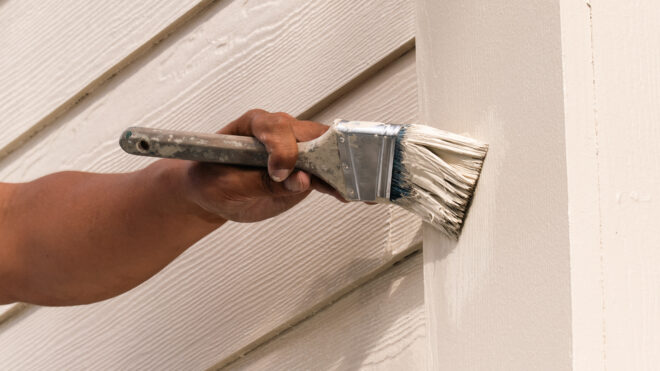
You finish the first coat, step back, and the wall looks dry. So how long should you wait before you put on the second? Recoat too soon and you can end up with streaks, lifted paint or a finish that never quite hardens. Wait too long and some products may not bond as well as they should.
In Florida, where humidity can be high and the sun can heat a wall quickly, the answer is not always the number printed on the can. Here is how long to wait between coats of paint, and how to judge the right timing for your own project.
How Long to Wait Between Coats of Paint: The Quick Answer
For most water-based (latex or acrylic) interior and exterior paints, the label commonly calls for about one to four hours before recoating under ideal conditions. Benjamin Moore, for example, notes that the recoat time for most waterborne interior paints is typically one to two hours. Oil-based and alkyd paints generally need much longer, often overnight or around 24 hours. Primers, stains and specialty coatings vary. Because every product line is different, the product data sheet or the instructions on the can are the final word. The rest of this guide explains why those numbers stretch in real-world Florida weather.
How Long Does Paint Take to Dry? Dry to the Touch vs. Ready to Recoat
This is the most common mistake in DIY painting. Paint can feel dry on the surface within minutes while the layer underneath is still releasing water or solvent. Manufacturers list two separate times: how long until the paint is dry to the touch, and how long until it is ready for another coat. Recoating at the touch-dry stage traps moisture in the film, which can cause:
- Brush marks and roller drag that pull up the first coat
- A tacky or soft finish that picks up dust and fingerprints
- Blistering or bubbling as trapped moisture escapes
- Uneven sheen across the wall
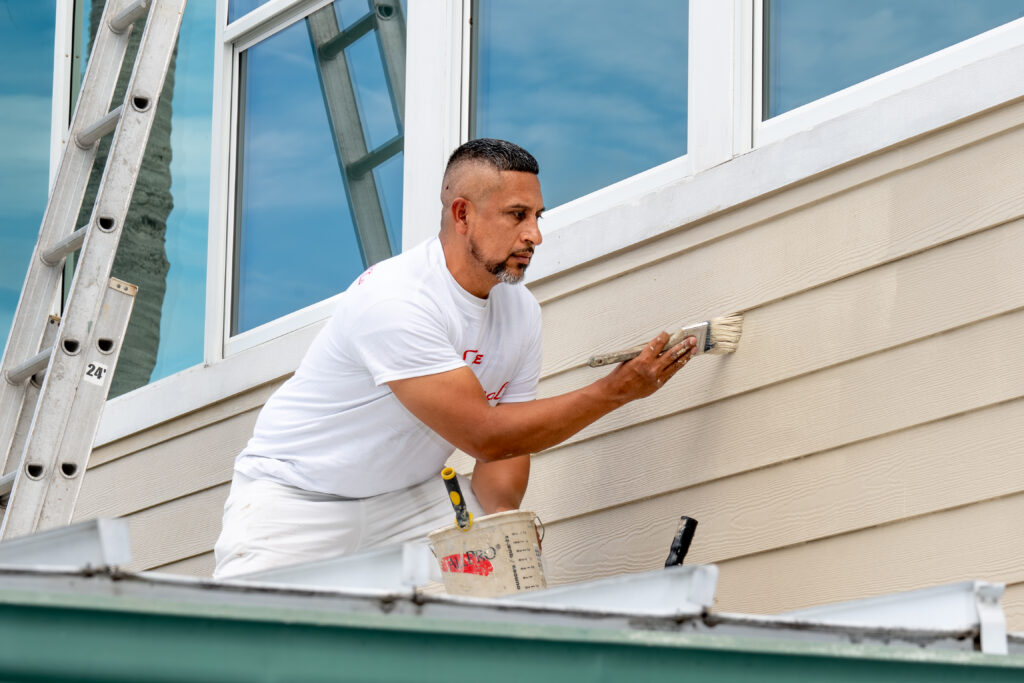
How Florida Weather Changes Recoat Times
Painting in Florida Humidity Slows Drying
Water-based paint dries as water evaporates. When the air is already loaded with moisture, which the National Weather Service describes as a high dew point, evaporation slows down. A coat that would be ready in a few hours on a dry day can need noticeably longer in a humid Southwest Florida summer. This is especially true indoors with the air conditioning off or in closed bathrooms and laundry rooms.
Heat and Direct Sun Can Cause Problems Too
You might assume hot weather means fast drying, and it does, but too fast can be a problem. When paint dries before it has a chance to level and bond, you can get lap marks, poor adhesion and a rough finish. Painting a wall that is baking in direct afternoon sun is a common cause. Most painters follow the sun around the house, working on shaded sides during the hottest part of the day.
Morning Dew and Afternoon Storms
Dew can leave a surface damp in the early morning, and a summer thunderstorm can arrive without much warning. Fresh paint needs time to cure before it faces rain, so exterior work is usually scheduled around the forecast and surfaces are checked to make sure they are fully dry before the first coat goes on. Drying conditions also shift with the seasons, which we cover in how weather impacts exterior painting in Sarasota’s fall months.
Paint Recoat Time by Paint Type
These are general ranges. Always check the specific product, because formulas differ.
- Water-based interior paint: commonly about one to four hours between coats in normal conditions; longer in high humidity or poor ventilation.
- Water-based exterior paint: similar timing, but give it extra time on humid, overcast or shaded days.
- Oil-based or alkyd paint: often overnight or around 24 hours.
- Primer: many are ready for paint within a few hours, though some stain-blocking and bonding primers have longer or different requirements.
- Trim and cabinet enamels: frequently need longer windows for hardness, plus light sanding between coats.
How Many Coats of Paint and Primer Do You Need?
Most repaints need two coats of finish paint for even color, sheen and durability. Bare drywall, patched spots and bare wood usually need one coat of primer first, while a dramatic color change or a stained surface may call for two coats of primer or a stain-blocking primer. On Florida exteriors, two full coats help siding and trim stand up to strong sun and humidity.
How to Tell When It Is Ready for Another Coat
- Read the can for the manufacturer’s recoat time and any temperature or humidity limits.
- Touch an inconspicuous spot lightly. It should feel dry and not cool, damp or tacky.
- Check the weather. If humidity is high or it is cooler than normal, add extra time.
- When in doubt, wait. An extra hour or two costs far less than redoing a peeling coat.
Common Mistakes That Lead to Peeling and Streaks
- Applying a second coat over a first coat that is still soft
- Painting over dirty, chalky or mildewed surfaces without cleaning first
- Painting in direct sun on a hot surface
- Skipping primer on bare or patched areas
- Applying paint too thick in an attempt to cover in one coat
Surface preparation matters as much as timing. On exteriors, that often means washing away dirt and mildew first, which is why many projects start with house power washing. For more pitfalls to avoid indoors, see our guide to common interior painting mistakes.
When It Makes Sense to Hire a Professional
Judging recoat timing, humidity and surface temperature gets easier with experience. Professional painters plan the sequence of a project around the weather and the sun, which helps each coat bond and cure properly.
Braendel Painting, Inc. has served Sarasota, Manatee and Charlotte counties since 1987, and our crews handle both interior and exterior painting and full residential painting projects.
Frequently Asked Questions
Can I apply a second coat of paint after one hour?
Only if the label allows it. Some water-based paints list a recoat time as short as one hour in ideal conditions, but Florida humidity often stretches that. Check the label and test the surface before you recoat.
Is it better to wait overnight between coats?
Waiting longer than the minimum is usually safe for water-based paint and is sometimes helpful in humid weather. Some products have a maximum recoat window, so read the instructions.
How long should you wait between coats of paint on walls?
For most interior walls painted with water-based latex, plan on about one to four hours between coats, or follow the recoat time on the can. In humid weather or a closed room without air conditioning, waiting longer, even overnight, is the safer choice.
Does humidity really change drying time?
Yes. Higher humidity slows evaporation, so paint takes longer to dry and cure.
How long should the paint cure before I wash or scrub it?
Paint may feel dry in hours, but full curing often takes a few weeks. Sherwin-Williams notes that latex and acrylic paints typically take two to three weeks to cure. Avoid heavy scrubbing during that time and check the manufacturer’s guidance.
Talk to a Sarasota Painting Team
If you would rather leave the timing to the pros, call Braendel Painting at (941) 923-1968 or request a free estimate. We offer free estimates with no deposit and a 100% satisfaction commitment.